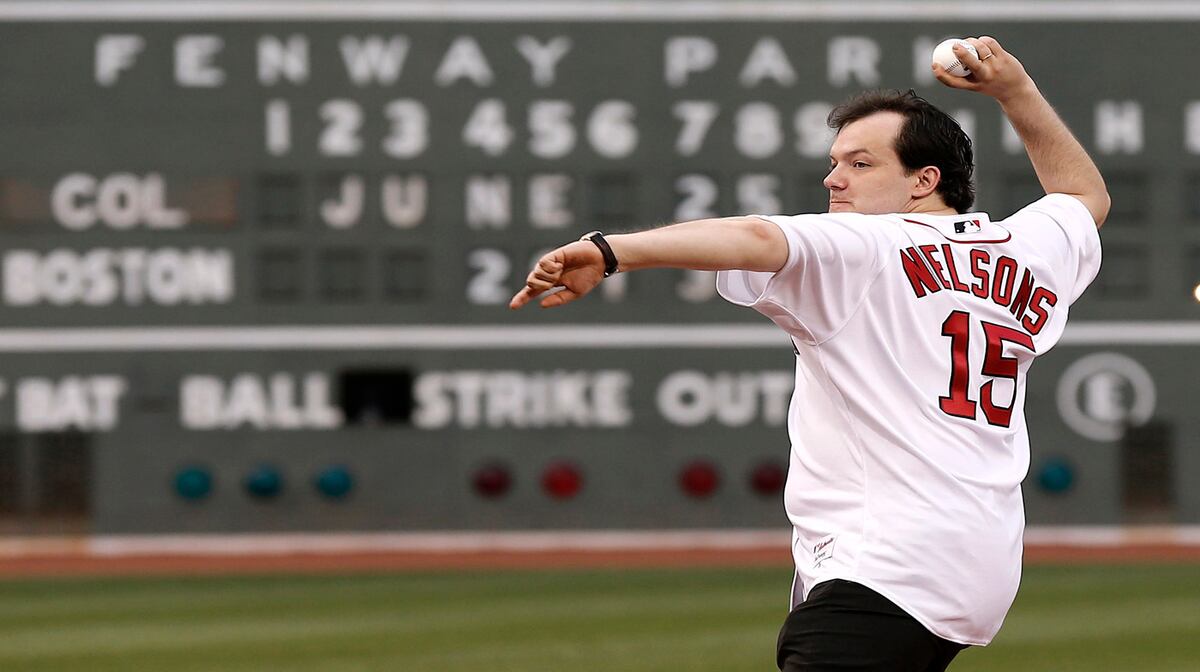
It’s been a while since I’ve witnessed what I consider to be a remarkable correlation between baseball and the classical music world—the raison d’être of this blog. But this past weekend? A direct parallel was staring me right in the face in the form of a notification from The Athletic: “Angry Red Sox players blast front office’s purge of Alex Cora, multiple coaches.”
Not even a mile away from Fenway Park, at Symphony Hall, the musicians of the Boston Symphony are currently being quite vocal about their anger with their own “front office”, i.e., the orchestra’s administration and its board of directors, for their dismissal of Music Director Andris Nelsons. (Technically, Nelsons was not fired. It was announced that the 2026-2027 season would be his last.)

In both cases, the players were not consulted in these decisions nor were they even informed of the decisions before announcements were made to the general public. Some Red Sox players learned of the Saturday night “massacre” on social media. As late as Monday, it was still unclear what “new role within the organization” Jason Varitek, fan favorite and revered member of the organization for over thirty years, would be tasked with. For his part, it seems Varitek has chosen to move on.
There are many differences in the two situations, of course.
- The Red Sox are a for-profit entity; the BSO is a non-profit organization.
- John Henry owns the Red Sox. No one “owns” the BSO. Professional orchestras rely on patrons for financial contributions and, more often than not, those with the deepest pockets are offered seats on a managing board. As members of the board, they are charged with the caretaking of the institution.
- Baseball players are hired by the “front office” of a team, typically the General Manager or Head of Baseball Operations. Orchestra vacancies are filled by an audition process in which qualified individuals perform prepared selections from the symphonic repertoire for a jury consisting of members of the orchestra itself. Sometimes the Music Director is involved in this process, and, depending upon the musicians’ collective bargaining agreement, he or she is allowed one vote or a vote equal to the number of musicians on the panel.
- The success of a baseball team is quantifiable by its win-loss record and/or making the Post Season; the attendance numbers at concerts are usually considered the marker of an orchestra’s success or failure.
Despite their differences in structural organization, hiring practices, and operational budgets, though, it’s actually quite astonishing how similarly dismissive heads of each of these organizations were of their own valuable, knowledgeable performers, i.e., the “product” they are trying to sell.
Nor have heads of either organization been persuasive in their explanations for the firings. Statements made to the press by Craig Breslow, Chief Baseball Officer of the Red Sox, just created more confusion. He publicly acknowledged that the roster he himself had assembled was a “challenging one to manage,” going on to admit that, “Ultimately the accountability for the roster falls on me.”
Ballplayers are rarely as candid as veteran Red Sox shortstop Trevor Story was when asked about Manager Alex Cora and members of his staff. Story described them as “some of the best coaches in the world,” and that he “felt like they didn’t get a fair shot.”

Yes, the Red Sox have had an atrocious start to the 2026 season. But why was Alex Cora and his entire coaching staff fired when you consider (1) that he was apparently greatly respected by the players and (2) Breslow publicly absolved Cora of any responsibility for the players’ poor performance?
There has been mostly radio silence from BSO leadership since Nelsons’ firing on March 10th. The board of trustees said in a statement put out shortly after Nelsons’ dismissal that it had chosen not to renew his contract because “the BSO and Andris Nelsons were not aligned on future vision.” The statement was signed by the orchestra’s board along with BSO president Chad Smith.
Pressured by the public and musicians to elaborate on what this “vision” entails exactly and precisely why Nelsons’ employment was incompatible with said vision, answers have been similarly perplexing. Describing a meeting musicians had with Smith and board chair Barbara Hostetter days after the shocking announcement, one musician requesting anonymity said the following,
“It felt like we were being asked to invest in something that’s been artistically bankrupted without a concrete plan for its recovery. Their explanation for everything was, basically, we’re running deficits. … What they’re saying is the first and best way to balance the budget is to get rid of Andris.”

Andris Nelsons continues to conduct, greeted upon his entry to the stage every night with thunderous applause and rhythmic clapping by the audience and by the orchestra itself. An organization calling itself the BSO Patrons Action Network continues its ongoing Red Rose Campaign, handing out roses to audience members as they arrive at the hall each night, matching the roses worn on the lapels of the musicians onstage. This has been a very visible and heart-warming show of solidarity with the musicians and with Nelsons who had been as surprised as the musicians were by the announcement.
The resistance has been palpable.

The Red Sox, meanwhile were back on the field with a new manager the very next day. Time will tell what the fallout from the front office’s actions might be.
I personally have never been convinced that the way to reverse a ball team’s losing streak is to fire the manager. He doesn’t select the players, and he’s not batting or fielding. But anxious fans and front office personnel, especially in large markets like Boston, clamor for change of some sort at these times. The climate seems to demand that there be someone to blame.
But firing the manager in this case really makes no sense since the person who fired the manger has put the blame for the team’s abysmal record on himself.
One can make the case for front office personnel making decisions not within the purview of its players. They don’t even necessarily need to disclose their reasoning for doing so, although it would be the respectful thing to do.
Having some sort of dialogue with players and/or their representatives, i.e., the orchestra committee and players’ committee, at the time such upheavals in the organization are first being contemplated would be the smart thing to do. The players, after all, are the ones performing in conjunction with the manager or music director. Why exclude their valuable collective expertise and experience?
From Letters to the Boston Globe,
“The superb musicians who make up the BSO, who were left in the dark about the board’s decision, should not have been treated so shabbily. They are the best to judge whether their conductor is a key ingredient in the excellence of the orchestra’s performance. And they have been united in deploring this decision and urging Maestro Nelsons’ retention.” —Dahlia Rudavsky, Newton
In an opinion piece shortly after the BSO decision was made, Boston Globe columnist Joan Vennochi stated,
“Still, when a nonprofit board disregards artists’ opinions, it demonstrates ‘a higher degree of arrogance,’ David D’Alessandro, the former CEO of John Hancock Financial Services, told me. ‘[The board members] are mostly very rich people who somehow believe that wealth and philanthropy entitle them to know more than the thousands of years of collective world-class musicians’ education and performances,’ he said.”
In Baltimore, where the Red Sox were playing a series with the Orioles this weekend, a meeting concerning the firing of Cora and others was held on Sunday morning with Breslow and other front office brass and a few players. No questions were allowed by the players at the meeting. Right-hander Garrett Whitlock, who attended the one-way conversation, reported,
“They [the front office] made it very clear that we get paid to play baseball, and we need to just focus on playing baseball. … So that’s where we’re at.”
Being instructed to “stay in your lane,” whether it’s directed toward talented musicians at the top of their field or skilled athletes at the top of their field is just plain disrespectful, not to mention downright foolish.
But it’s gone even further at Symphony Hall: internal board memos accusing “certain BSO personnel and other members of the BSO community” of in essence sabotaging recent fund-raising efforts have now surfaced.
Yeah, right: let’s blame the musicians for hurting fund-raising. Wait. Isn’t it the primary job of the board and CEO to secure adequate funding for the institution? And does it not also fall to them to promote the product? Weren’t the musicians supposed to “just play their instruments,” and leave all that other “new vision” stuff to management?
At the very least, administrators owe their players the courtesy of a private meeting to inform them when a decision of this magnitude has been made. And it should be conducted prior to an announcement being made to the press and general public. It is reprehensible that BSO musicians and Red Sox players were kept in the dark and found out along with the public that these decisions had been made.
In conclusion, let’s not forget that absolutely no one buys tickets to see the BSO administration and its board. Nor does anyone buy tickets and come to Fenway Park for a glimpse of ownership and the front office.
In both of these unfortunate cases, those charged with fielding a winning ensemble did not include the actual talent they have assembled—and paid a pretty penny for in the case of the ballplayers, I might add—to have a voice in decisions that directly impact the players’ performance on the stage and on the field. Then, once the decision had been announced and the backlash started, instead of acknowledging the slap in the face that this represented to its players, each organization instead doubled down, essentially saying that it knows best.
It’s anathema to professional performers not to give their best performance under any conditions. That said, it’s safe to say that a toxic work environment where players feel unsupported and where their opinions are not valued or even solicited—especially in matters in which they have an acknowledged expertise—is not a recipe for a winning team. In the case of a ball team, that might make itself known by low morale, sluggish playing, and/or an unimpressive win-loss record. With an orchestra, evidence of such lack of appreciation and understanding might manifest itself in similarly low morale and in players leaving the orchestra to play with other ensembles.
The distrust engendered by both front offices here will take a long time to repair. And, in the case of the BSO, management’s callous, insensitive power grab is ill-timed to boot: the musicians’ contract is up for renewal. Negotiations are now underway under a thick cloud of distrust and acrimony.
You must be logged in to post a comment.